October 4, 2014

Seeking Alpha – Contributor

I update my current situation by telling you, my dear readers, that from now on I will be publishing most of my text in Seeking Alpha website. This is because there my texts get a more precise audience, and a larger audience. Plus for good works I actually get a small monetary fee, as I was recently accepted as a contributor on the site. This blog site will remain in use for for my less economic or financials texts, at least I try to do so. In any case, from now on majority of my work can be found through a link placed below.  

You can see my profile HERE.

July 6, 2014

Being Busy

I'm terribly sorry that I haven't been adding content here. Currently I am writing my master's thesis so that takes all my time and I haven't even been thinking about investing much if it hasn't been related to my topic. That topic is value investing and studying six Latin American and two North American markets. Basically my thesis has two parts:  By different indicators I attempt to understand where these emerging and developed countries stand and where they might go during next years. Secondly I have stock data from these countries that I use to test different value investing strategies, and to see if value investor benefits from looking outside the US and Canada without taking on more risk. My plan is to have this work done in a few months so then I will return with more content. Till then, take care of yourselves!


April 14, 2014

Budget Deficit of the US

I refer to a news by Bloomberg, Obama’s Shrinking Budget Deficits Silence Foreign Critics (April 14, 2014) where for example reads the following:

The Congressional Budget Office projected today that the 2014 deficit will be the lowest in six years 
More evidence of fiscal health came last week, when the Treasury Department reported a deficit of $36.9 billion, the smallest for that month in 14 years. Revenue increased 16 percent to $215.8 billion from $186 billion in March 2013. Spending totaled $252.7 billion, down 13.6 percent.
and
Michael Darda, chief economist at MKM Partners LLC, estimates the U.S. deficit fell to 2.9 percent of gross domestic product in the first quarter from a peak of more than 10 percent in 2009. 
The deficit will shrink to $492 billion this year from $680 billion in 2013, according to the CBO, which today projected a gap of $469 billion in 2015. After that, the deficit will start rising every year, reaching $1 trillion by 2023. 
The increase will be driven by “dramatically” rising Medicare and Social Security payments needed to care for an aging society, said Jersey of Credit Suisse.
This is interesting because any improvements in the US' economy are positive for the rest of the world. But we can doubt the real effect of these improvements. As stated, deficit is smallest in a long time, but it is still a deficit large enough to run a small country. And mister Darda states a scary direction for the future. Clearly Obama has been able to make some clear changes, but in the end those probably are not enough without more major changes in the spending and taxation. They could do something as crazy as quit their spending on military, tax tobacco, guns and alcohol more.. but we all know their congress is unable to achieve any true compromises and create changes. Therefore my hopes concerning the future of the US' economy are not any brighter.

April 6, 2014

Sunday Culture - Politics

Most of us believe that we would make better politicians than those elected. Well for all us there is a perfect game for that called Democracy 3. It is a very well done game, very deep game that shows you how all your decisions affect each other, and that is the lure of the game. It shows how demanding it actually is to make political decisions as you try to build a better society. Below is a video by a British game tester called The Cynical Brit and he shows and explains how the game functions. Enjoy!


April 5, 2014

Asset Allocation

This blog text is about how I see asset allocation in an investment portfolio. At least in my own case. This is basically how I would advise someone else to allocate their money. My idea is to make sure that enough money is kept behind for a rainy day in safe places such as a bank account, and stocks or  other investments of this type hold everything else. 

I would say that the choice is between a bank account, bonds, stocks and finally, other assets (real estate, copper etc.)

First of all bank account holds what the investor needs during the next year and can't risk losing. For example money to pay rent and living costs for a year in the case of unemployment. Next (in the typical case that bank accounts pay less interest than bonds) investor puts capital into bonds that she definitely does not want to lose. Time frame is over one year and the idea is that the investment is always held till the end (Because bond prices can fluctuate and selling might mean selling with a loss, therefore it is best to wait for the bond to pay itself back). These are bonds that seem safe, such as German government bonds or debt of highly prestigious companies, such as General Electric and Volkswagen.

All this represents money that the investor does not want to take risks with, that he/she doesn't want to lose incase they are suddenly in need of cash due to sudden medical bills/ unemployment/ lawsuits etc. Few people instantly have enough cash behind them so this cash bumper must be built through time dividing income in appropriate manner between their portfolios.

Next comes money that the investor can truly invest in the purpose of making more money. Major part of this capital will be in stocks and rest could be in other assets, such as real estate, risky government/company debt, metals or options and commodities such as coffee futures. I would say that stocks alone are enough since you can divide your investments between safe companies and risky companies by following many different stock investing strategies. I also don't mean that investor should focus on one certain market, such as their home stock market. There is no reason to do this since world is full of quality companies in different countries. It all comes down to doing good enough research to base your decisions on. 

Due to interest towards certain areas or expectations of certain commodities for example experiencing a surge in prices it is understandable to invest into other risky(-ish) assets such as commodity prices. Someone could focus on these assets instead of stocks which is perfectly understandable if that is their speciality. 

Investor invests to those assets after serious concentration that this money won't be needed. Investor has made careful research and he has strong reasons to expect his investment be profitable after some years, but due to sometimes long waiting periods or negative changes in value his waiting period might be long. They accept this and are confident in their decision.

Some investors ask "How much should I invest in bonds, and how much in stocks?". To me this questions is irrelevant. In the long-term stocks in general are always better investment choices than bonds in general. Bonds hold capital that you do not want to risk, but want to get a better interest rate than a bank would pay. Stocks or other assets hold the rest of your wealth that you can tie down for long periods (such as real estate investments). As I said there are many stock investing strategies to follow. But basically I would say that unless investor already holds considerable wealth and only wants to enjoy slow but sure growth (by for example investing in to safe companies that pay high dividends) then I would advise any investor to follow a strategy that expects the actual stock price to grow (such as value investing strategy).

At the moment I personally focus on investing in to stocks, but I do follow other areas such as coffee prices and real estate investing for example. So some day I'm sure to invest in to these areas if I find suitable opportunities. 


An example of different possibilities an investor could go for:

March 20, 2014

Bubbles Come and Bubbles Go

In my earlier blog concerning my expectations for 2014 I stated, that I expect stock prices to continue going upwards for most of 2014 or whole year. I still hold on to that statement unless current situation in Ukraine goes out of hand and we see an actual war, or serious economical limitations are set towards Russia. 

If talking about S&P500 index (Graph below for the past year from today, March 19.) we can see clear  a upward trend. I wouldn't say that the market is even close to a bubble yet BUT if the FED keeps interest rates down longer and longer (Bernanke has stepped down and been replaced by Janet Yellen, but so far she seems to be holding rates low, which I find to be a sad decision), in that case the market will go towards a bubble state and I advise all stock investors to be careful.
Source: Bloomberg, S&P500 index, 1y.
If a stock bubble does come, then by examples from history I expect it to last for a few years. This is total speculation at this point but I would guess, that for the next 3-4 years from this point we see stock prices mainly going upwards. Next 1-2 years stock prices grow like we have seen so far, at a steady but clear phase. The following two years after that are more bullish in an increasing term. After that we will hit a season when prices again go downwards. My expectation is 4 years, but I wouldn't be surprised if a bubble came and lasted even longer than that.

This guess of 4 years is based on the expectation that current situation continues, that the FED or the U.S. government does not attempt to control the financial market (until it is already too late). Maybe I am completely wrong or something unexpected happens and changes everything. Anyway a man must speculate and create scenarios in his mind to be prepared for as many outcomes as possible.

I HOPE that the FED does its job to stabilize the market and starts raising interest rates. So that, stock prices stay under control and we will enjoy a long period of steady growth instead of 5 years of feasting and then 5 years of hunger. 


But of course I have to remember, that every crisis period creates the best investment opportunities, so on the other hand I should be happy for the stupidity of the FED and all the politicians.


March 16, 2014

Battle for more Debt

I will start by showing a simple picture in which red colour shows if a country supposedly has too much debt to carry. This picture is part of a material provided by The Economist.
Source: http://www.economist.com/content/global_debt_clock

As you notice, burning red colour covers all the main developed countries that are the most developed, have the largest financial markets and lead the world politics. Only meaningful countries without blood stamp on them are the Nordic countries, Russia and New Zealand but even all of them are high up in the colour chart. Also the only countries in the European Union that aren't covered by debt seem to be Estonia. Latvia and Lithuania. 

This same trend of increasing debt can also be seen in South American countries. Especially Brazil jumps out but also the other emerging countries like Peru and Colombia are following her example. Actually almost the only countries where debt is marked to be low are countries that are still quite underdeveloped, such as most of the whole Africa but apparently some countries do not even have any data about them.

Following picture shows the total annual debt change per country and paints a slightly more positive image. 
Source: http://www.economist.com/content/global_debt_clock

Referring to the total public debt, similar trend can be seen in this data also provided by The Economist which shows more clearly  differences between countries and includes information on government, household, financial and non-financial debt for all the major economies of the world. Sadly this data excludes many smaller countries, such as the Nordic nations. When looking at total debt in every country we see this graph.  
 
                                  Source: http://www.economist.com/blogs/graphicdetail/2012/09/global-debt-guide

I do wonder China's situation as first picture shows them being a problematic country, but this data shows them doing quite well for themselves. And then we can read news like THIS that give us reason to trust the first picture more and that if information used for the second source is provided by governments then the actual numbers can be even higher for multiple countries.

Japan's high net debt is no surprise but what separates it from the other countries on the list is that large part of its debt  that is held by the government is borrowed from its own citizens. Meaning that if Japan ever decides to default or pay its debt by printing the money needed, then its own citizens would be the ones suffering for the after effects. That is why probably we won't see that ever happening. I'd suspect they would first increase their borrowing from the international markets to honour their obligations to their lenders back at home.

Now about rest of the countries. Personally I don't worry if the government or financial sector holds too much debt. Because I believe that those problems can be controlled if proper decisions are made. But what I do worry is if households hold too much debt. Because that shows that problems are on the ground level. If ground level fails then that will spread to all those banks and companies that do business with(-in) that sector, meaning for example multiple banks that deal with mortgages. When in the case of a financial company failing, the effect could be controlled to only those tied to it, and I believe that companies that stupidly are overly tied to an other company deserve their cruel ending. Because that is how markets are supposed to work (clearly banks are overly tied to each other as we saw from the aftermath of previous financial crisis), punish the wrongdoers.

WAIT? BRITAIN?

Household debt is told to be largest in Britain, Canada, United States, South Korea, and Spain.
Source: http://www.economist.com/blogs/graphicdetail/2012/09/global-debt-guide
 If we compare this information with the overall picture just before, we see that Britain, South Korea and Spain are on the top of the overall list as well (Canada and the United States are not too far either). Now is this worrying? I would say a strong yes. Especially in the case of Britain. Because Britain is in the top three of every list by The Economist.  I wouldn't say that any of these countries are doing great, but Britain is in a class of its own.

And if we look at timelines of the development of their debt then two countries stand out: Spain and Britain. 


They stand out because development of their debt has been much sharper and sudden than in the case of any other country in the sample. They all have experienced a slowdown in the amount net debt but until that graph starts clearly going down there is no reason to celebrate. For example we can compare those pictures to the one of the U.S. which shows similar directions but smaller total % and steadier long-term growth. Now Spain is already in trouble and trying to sort out its debt situation. But Britain? 
For example the CIA's World Factbook lists United Kingdom as the country with second largest debt in the world (After United States) and this lovely list that someone put in Wikipedia tells us that of the countries included in the data of The Economist, Britain has the highest debt per capita (three times that of the United States). 

That isn't even the end of bad news from Britain. Here is a graph showing Britain's trade deficit. You might notice that after the financial crisis numbers go very low, but they were low even before it. That is a worrying sign when one of the leading countries in the world is not able to have a trade surplus even during times that are supposed to be times of growth.
Source: http://www.bbc.com/news/business-25944653
I am more and more worried of Britain as I find more information, but the sad fact is that rest of the world is slowly following in its footprints (or Greece's..) To feel sad due to Greece we can look at another article from The Economist (yes, I seem to have a thing for their articles) published in 26th of October last year. It is about Puerto Rico's debt situation and how ... Well mentioning Greece of the Caribbean tells all you need to know (Another news on the matter)... 

Following numbers remind us that small countries whose bankruptcies might be meaningless to the rest of the world are slowly getting in to trouble as well.
Source: http://www.economicshelp.org/blog/774/economics/list-of-national-debt-by-country/

IN THE FUTURE

Now since we don't have a time machine or any other ability to change the past I don't waste anyone's time by wondering why things are as they are. I would like to focus on the present and the future. Because if something, such as wise decisions are not made in the present then the future will look even darker and our generation might be remembered as Generation D, D stands for debt.

Situation such as this can only be changed in the governmental level. If households are taking too much debt then the lawmakers should control bank's enthusiasm to overlend. For example demand larger wealth for mortgages. Same ideology for business loans etc. But when the problem is government taking more debt then it is up for the politicians to make those hard decision that concern about themselves (meaning they might not be re-elected, probably every politician's worst fear). The truth is that unless politicians start being farsighted and bold enough to make some hard decisions that might hurt them but be good for the country in the long-term, then we will never get out of this rat wheel of increasing debt. Greece waited too long to restructure its debt and is now paying the price.
Source: http://www.debtbombshell.com/

Sunday Culture with Breaking Bad

I'm a Breaking Bad fan and couldn't resist sharing this quite awesome creation ;)


February 21, 2014

Reading Recommendations

Lately I have been reading a lot more to deepen my knowledge of the psychological side of investing, of behavioral finance especially.


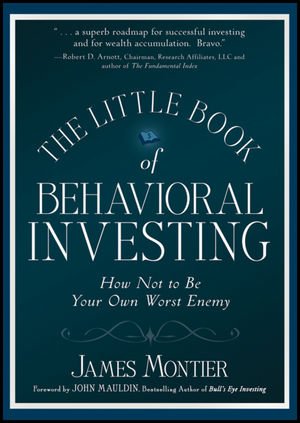
First of all I'd like to recommend you to read this following small book called "The Little Book of Behavioral Investing" by J. Montier. 


Montier has written a very interesting book on the behavioral psychology and markets. He refers to multiple interesting research papers and keeps his text friendly and understandable to everyone. 

I wholeheartedly recommend this book if you do not already possess great knowledge on the subject.


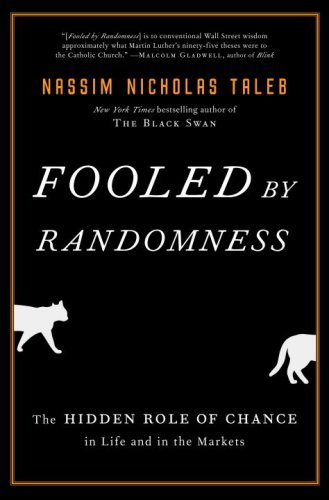
Another great and very interesting book is "Fooled by Randomness" by Nassim Nicholas Taleb (The author of famous "The Black Swan"). It is 291 very interesting pages talking about chance, human behaviour and people's their understanding of mathematics. By mathematics I mean he talk about how people do not correctly understand the likelihood of events. Such as likelihood of of extreme market events, or just how doctors do not understand what it actually means when you have a 95% chance to heal and 5% chance to die due to your surgery. 

Very interesting book for everyone to read.


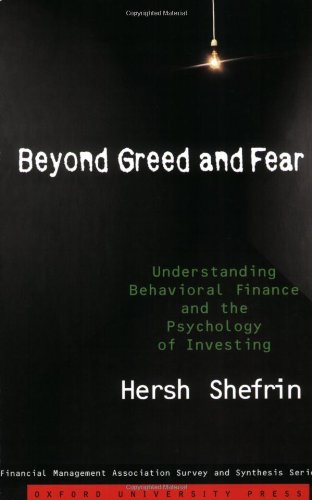
At the moment I am reading "Beyond Greed and Fear" by Hersh Shefrin. As you can guess it focuses on behavioral finance and I have now started to read through it to deepen my knowledge on the subject. My master's thesis (dissertation) will focus on value investing returns and great part of my thesis will focus on explaining market behavior by behavioral finance. 


It is a  book I bought after some recommendations and so far it seems highly interesting so anyone interested to continue deepening their understanding is highly recommended to grab a copy. 

January 8, 2014

Buffet's Problem

During 2013 as I heard how Berkshire Hathaway (News always just say Buffet this and that..) invested into this and that I've always checked how I see that specific company. And sometimes I would not support that investment decision. 

One example being International Business Machines Corp (IBM)
I don't understand why that investment was made so early.  IBM is strongly overvalued and price had been coming down all year. The company is in the middle of changes to return back to the good track again as they are struggling with profitability. As a rational investor that investment should have waited until the price is right. In the long-term a company like IBM is probably always a good investment. But with price paid that should be about $190 per stock and Berkshire Hathaway owns 68.12 million shares... It is going to take a long time for this investment to pay itself back by dividends. We know that Buffet invests for a long long time, pretty much permanently so price rise isn't even important. But a fact such as a troubled company experiencing price decline should matter!

So why? There are more loveable companies to invest in than IBM. But perhaps IBM is seen as a bank. They will (most likely until a huge random event occurs... I can hear Nassim Nicholas Taleb screaming in my mind) continue to be a huge market player and pay large dividends. Still I criticize the timing! So I wonder if this was purely Buffet's own decision. We know he has at least one pupil who is planned to take over the company as Buffet himself retires. 

So.. Why!?
Berkshire Hathaway is too big, they have too much money. Investing into small companies isn't worth the trouble because they are looking for opportunities to invest billions of dollars (IBM, about 13 billion). And the more money they acquire the harder it is to spread it out. Berkshire isn't like Blackrock, they have very different investing methods and as Berkshire gets wealthier their job gets more and more difficult. 

What I mean by all this is that Berkshire Hathaway is about to change. And they have two main problems that are
  • Buffet will eventually retire
  • Berkshire Hathaway has too much wealth to invest

I am not too confident that people replacing Buffet are able to continue with his investing methods and handle all that wealth. Unless they want to play it safe and just keep everything as it currently is. One thing Berkshire has been quiet about is company purchases outside the U.S. Yes they have done something, but not a whole lot. There are plenty of businesses to buy and stocks to purchase if they start looking more actively into those markets. Then they should be able to invest all their current money in acceptable manner and continue growing for a few more decades before facing this same problem again.

So the third problem I'll point out:
  • Too focused on the U.S.
Treat the whole world as your portfolio, not just one country of it.


Some reading on the matter: http://www.bloomberg.com/news/2014-01-02/berkshire-seen-failing-buffett-5-year-test-for-first-time.html


____________________________________________________________________________________________________
UPDATE 16th of March 2014 based on news about Berkshire Hathaway's 2013 results.

As we finally got the results of Berkshire's investment portfolio for 2013 two things are clearer:
• Berkshire Hathaway didn't beat the S&P500 index but still provided a lovely return for the long-term (32.4% versus 18.2%).
•BH made $19.5 billion. Therefore they have even more problem of putting their money in to work. I am not saying Buffet isn't a smart enough man to do it and he certainly is not too old for the job. But, more money means more investments and what I fear is that eventually BH's portfolio is so over diversified that returns by percentage measure will keep going lower (Although money wise they are breaking records).

January 1, 2014

Portfolio return for 2013 +69%

End of 2013 marks one interesting fact: Return reports from fund managers and the likes. Past year was kind to my investment portfolio. It could have gone better and worse depending of made choices, but I can be very happy with the return I've gained and lessons I've learned this year.

First, the final return:

In August I listed what was my portfolio's return at the time, which was 52% in total (without any dividends). Last months of the year continued to be kind and final return jumped to 69% with dividends included. For me dividends are a nice bonus but I don't do my stock picks based on dividend levels. I aim to pick companies long before they start to grow their dividends ;)

             Changes in the portfolio:

Some changes in my portfolio will be made for 2014. AIG and Nordic Mining are tightly kept for now. Bank of America, Citigroup and Protective Life Corp are kept for now but followed. They are over or too close to their book values, but I'm sure these companies will be growing if the economical situation of the US continues to improve. These are quality companies that I like having in my portfolio and could be kept for years to come. 

China Green Agriculture, First Solar and Xinyuan are sold from the portfolio. First Solar is clearly over its book value at the moment. Also I am not seeing any big momentum moments coming that would catapult it to higher levels. Therefore it will be removed from the portfolio but if the price returns to appropriate levels later on, it is likely that it will return into my portfolio. Clean energy companies are something I like to follow. CGA is too small and suspicious to be kept for longer. If I was managing client's money I couldn't anymore justify the risk with the knowledge I am able to obtain of them. Same goes with Xinyuan. Xinyuan seems good and growing, but the one thing that bothers me is that their internet site still, after all these years, has no info or pictures of their development projects. I tried to email them and ask about it, but received no reply. Therefore I'm now withdrawing my investment as I do not possess the resources to go and actually meet the management and verify their projects. 

Longwei was deemed to be a lost investment very early this year. Sadly not early enough so I wouldn't have included it in my portfolio. But it provided an important learning opportunity. Tesla was already sold earlier this year after their huge price jump. Timing was quite perfect as although Tesla's stock has shown some strength later on but the price is still about 22 USD below my selling price. Because the stock is greatly overvalued it won't be returning into my portfolio for a long time. 

New additions are Genworth Financial ($15,53), Symetra Financial ($18,96) and Aegon NV (6,86€). Basically adding three insurance companies to the portfolio. I would like to add a few more companies and avoid too much weight on insurance companies (or to USA as Aegon is only non-American company being located in Holland), but I haven't been able to find many well priced quality companies with the time I have in my disposal. I'll try to fix this soon as I'd prefer having at least ten stocks in my portfolio.

              Thoughts: What is there to be learned

Longwei Petroleum Investment Holding showed the importance of good background work and carefulness with companies that are under suspicion from other investors. Chinese companies As reports against Longwei were published it was hard to know if it was true or not. But eventually Longwei failed to defend itself so the truth became clear and this stock which had shown great returns till this was suddenly worthless. This kind of risk is why we must be ready to lose what we have invested, therefore only investing money we are ready to live without, and also the importance of diversifying your portfolio. 

Tesla was more of a technology company in which I believed in because I really liked their products and the company seemed to have a solid plan under their visionary CEO. Then luck came and suddenly I had a 400% return form my investment. So it wasn't a value company, but a promising technology company that was on a good track and possibly having a very promising future. Intuition is an important part of investor's psyche. With more experience you learn to value different opportunities. Valuing growing tech companies is difficult, but because I like to stay updated on how the technology around us is evolving, I will continue to make more investments into tech firms when I find something to my liking. This mostly means technological advancements that are part of the future, such as google's self-driving cars. Tesla also showed how easily such a company can have a huge uplift in stock price when market loves good news. And how easy it is to come down as market gets afraid of something negative (news of a burning Tesla).

Nordic Mining has given me a lot of lessons on what to expect from start-ups. NOM has waited for its mining permit for a long time now. And slowly its stock price has been coming down as they have needed more financing and released stocks because of this. Earlier during 2013 their price dropped from 0,7 to 0,3 because of this. And because of promising news (Norway's governmental elections made room for a more mining friendly government, and some typically positive results from the mining locations were released) NOM's price got up from 0,3 all the way to 1,5. So patience indeed is a key. You must have a strategy when you invest and if you have done your background work well, then you don't need to worry about price declines because those will come. You invest what you invest and wait as long as is needed.

Something else worth mentioning is the importance of crisis periods. Bank of America, AIG and all of these other big companies with record low pricings when the financial crisis started have given great returns to those who were not afraid to jump in early. If you do your background work well, you have a solid strategy that you are ready to always follow then you indeed embrace such crisis times. Because those make you rich.

             Expectations:

Budget talks in the US could create problems and investment opportunities
Source: The Economist KAL's Cartoon
US Congress will be having budget talks again this year (bloody battles where they reach no permanent results). The scarier the situation the more the stock market will react, but after difficult talks they will surely again reach a short-term solution and market won't really notice anything. But we can't forget that these budget talks could become a problem and if that does happen investors should be happy because that gives us a great chance to invest into some quality companies for cheap. The stock market would take a big hit, perhaps even do a HUGE dive down. So investors would need to be prepared with their actions. As soon as congress would have a working budget plan the market would start to recover. And I expect that the reactions could be quick.

Bubble? No
Many indexes have risen greatly during 2013. If you look at S&P500 you see it is at record high numbers. But the growth is not fast enough to show signs of a bubble. So, for now I expect that this growth will continue. Budget talks of the US congress will slow it down, but it shouldn't be a real problem. And if we do not uncover any other crisis this year (2014) then indexes will continue to grow well. If you look at the picture below (S&P500 index during 2013 by money.cnn.com) you see that the summer time from May till the start of September was the weakest period of the year in total return (also two big dips provided). I would expect things to go in this fashion again. And last part of the year could show signs of slowing down if overall growth is as strong as this year. Or perhaps we are just at the start of a new economic boom that will continue for a few more years. In this case finding value investing opportunities will be more difficult and I'll surely have to dig harder for profitable investment opportunities and be more flexible with my choosing. Such as young growth companies need to be considered more openly.


After these few pointers I am not seeing any big things happening in our near future. Europe hasn't had any real drama in a while. Things are handled, well or badly is a different matter, but handled and market have stayed happy. Greece and Spain among others have been more stable and as long as Italy avoids doing the same mistakes then Europe will remain calm. 
2014 should be a positive year for the markets, and if not, it will be a very positive year for long-term investors ;) So even a bad news carries golden opportunities.

I hope you all have a great year!